Polar Bear
Well-Known Member
- Messages
- 83
- Location
- Montreal
So recently at work we started a new safety program called Safe Start http://www.safestart.com/
It is all about being safe in our day to day activities. At work we have tons of protocol to follow in order to make sure we are doing the procedure safely, but what about on your drive to work? At Home? Working in your Garage? Lounging in your backyard or doing cores?
What about when we are Off Road?
As you can see there is a lot that we never really even consider...we take it for granted since we are doing OUR day to day activities!
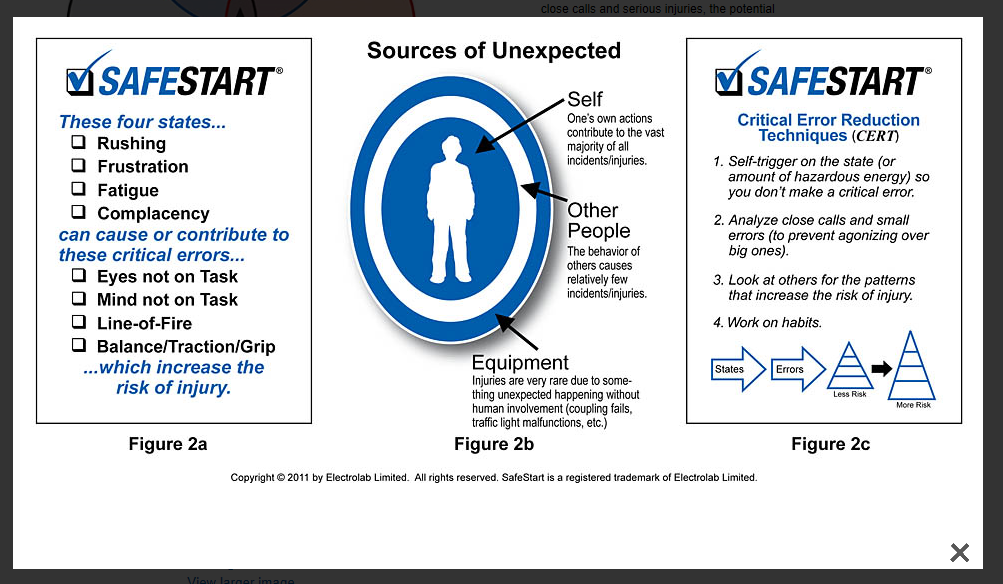
As a result, I have started to look at what I do everywhere and ask...can I do this safer and better than I do right now?
For Off-Road, some of the things that I am doing are;
1. I just got myself recertified in First Aid. A lot changed since my last certification so it was well Worth it! Is your First Aid Ceritifcation up for renewal???
2. I will be purchasing a large medical back pack that will permanently reside in my H2. I will make sure it will have everything possible, I just never want to have to use it! I will also have a sticker on the exterior of my H2 indicating where it is located in the offortunate event.
3. I am also making sure all my Off-Road gear is in good condition, like; No frays in my winch cables, no cuts in my straps, shackles not bent or deformed...etc.
4. I am even toying with the idea of wearing a helmet when out of the truck on the trail, simply because I have already slipped many times and hit my head...I never hurt myself and I would like to keep it that way!
Now I know some of you are probably saying; all this isn't necessary and you would be right. It is simply things that I am personally choosing to do to make my life and that of those around me safer.
Another point to consider, when carrying spare parts. If your current parts are worn and need to be replaced...change them BEFORE you head out on the trail! It is always easier to replace a part in your driveway with no stress than to be stressed out on the trail trying to change it with your Hummer stuck in a weird position!
But don't throw those parts away...they could be used as a spare to get you out of the bush in the unfortunate event that you do break something, unless of course they are really badly worn and not safe!
Just some Safe thoughts before Off-Road Season Begins!!
Kev
It is all about being safe in our day to day activities. At work we have tons of protocol to follow in order to make sure we are doing the procedure safely, but what about on your drive to work? At Home? Working in your Garage? Lounging in your backyard or doing cores?
What about when we are Off Road?
As you can see there is a lot that we never really even consider...we take it for granted since we are doing OUR day to day activities!
As a result, I have started to look at what I do everywhere and ask...can I do this safer and better than I do right now?
For Off-Road, some of the things that I am doing are;
1. I just got myself recertified in First Aid. A lot changed since my last certification so it was well Worth it! Is your First Aid Ceritifcation up for renewal???
2. I will be purchasing a large medical back pack that will permanently reside in my H2. I will make sure it will have everything possible, I just never want to have to use it! I will also have a sticker on the exterior of my H2 indicating where it is located in the offortunate event.
3. I am also making sure all my Off-Road gear is in good condition, like; No frays in my winch cables, no cuts in my straps, shackles not bent or deformed...etc.
4. I am even toying with the idea of wearing a helmet when out of the truck on the trail, simply because I have already slipped many times and hit my head...I never hurt myself and I would like to keep it that way!
Now I know some of you are probably saying; all this isn't necessary and you would be right. It is simply things that I am personally choosing to do to make my life and that of those around me safer.
Another point to consider, when carrying spare parts. If your current parts are worn and need to be replaced...change them BEFORE you head out on the trail! It is always easier to replace a part in your driveway with no stress than to be stressed out on the trail trying to change it with your Hummer stuck in a weird position!
But don't throw those parts away...they could be used as a spare to get you out of the bush in the unfortunate event that you do break something, unless of course they are really badly worn and not safe!
Just some Safe thoughts before Off-Road Season Begins!!
Kev