• Welcome to H4O! For a reduced ad experience, please login or register with the forum.

off road gear

digglesworth

Well-Known Member
Messages
1,789
Location
illinois
So I'm trying to put a case together with off road gear. I think I have a decent list going of tools to change tie rods, cv shafts and what not. What would be appropriate size shackles? How about a tow strap? I see some straps are for towing, some for yanking... Some are 2", some are 3"... Is it necassary to have a complete set of sockets, screwdrivers, pliers, etc?
 

SuperBuickGuy

Well-Known Member
Messages
3,403
Location
Woodinville, WA
first worry about yourself... this is what I carry (granted, I'm in SAR but these really are good for anyone)
1. Backpack (60L min, internal frame is best)
2. First Aid Kit: small, personal type
3. Sunglasses: inexpensive Sunscreen: SPF 30 or higher
4. LED Head Lamp with spare batteries
5. Matches & Fire Starter (waterproof)
6. Pocket Knife or Multi Tool
7. Compass: must include sighting mirror
8. ¼” Nylon Parachute Cord: 50’ min
9. Leather Gloves
10. Whistle
11. Space Blanket: mummy bag type
12. Water Bottles (2) or Bladder: 2 Quart min.
13. Food for 3 Days: no cook trail food (keep one day supply separate for short missions)
14. Emergency Food: high energy, no cook
15. Insulated Ground Pad
16. Heavy Duty Large Plastic Trash Bags (to keep your backpack contents dry)
17. Boots: lug-soled, waterproof
18. Gaiters: waterproof, knee-length
19. Climbing Helmet with Chin Strap
20. Basic Clothing: wool/poly t-shirt, underwear, pants and socks Rain Jacket & Pants: medium duty must be water & wind proof.
21. Extra Clothing: warm pants or heavy-weight long underwear, warm long-sleeve shirt or heavy- weight base layer shirt, 2 extra pairs of socks, warm hat, warm mittens or gloves.) NO COTTON

Optional
1. Day pack (for short missions)
2. Trekking Poles
3. Bandanna or Brimmed Hat
4. Balaclava or Scarf
5. Light-weight long-sleeve shirt
6. Light-weight long underwear
7. Additional warm layer for legs
8. Additional warm layer for torso
9. Tarp: silver/red reinforced type (replaces space blanket)
10. Bivy Sack
11. Spare Light
12. Toiletries
13. Stove (pocket rocket or slightly larger with fuel)

Overnight
1. The above essentials
2. Sleeping Bag
3. Shelter (Tent, Tarp, or Bivi Sac)
4. Mess Kit
5. Stove & Fuel (May be Shared)

Emergency Food Suggestions
Emergency food should not require cooking and should keep in a pack for a month or more. An active volunteer should have their pack(s) packed and ready to go at a moments notice.
1. Enough for one day plus
2. Trail Mix
3. Granola Bars
4. Chocolate
5. Jerky
6. Nuts
7. Raisins
8. Hard Candy

First Aid Kit Suggestions
1. Rolling Kling or Gauze Adhesive Tape
2. 4 x 4 Gauze Pads
3. Triangular Bandage
4. Band-Aids
5. Safety Pins
6. Moleskin
 

SuperBuickGuy

Well-Known Member
Messages
3,403
Location
Woodinville, WA
For the 4x4 group.... we carry

let me underscore GROUP never wheel alone


1) Flashlights and batteries
2) a tow strap
3) a snatch strap (they are NOT interchangeable)
4) hi-lift jack, and accessories like jacking pads, gloves, etc
5) basic handtools, metric socket/wrench set from Sears is pretty good (Craftsman), screwdrivers, duct tape, zip ties, channel locks, vise grips, wire cutters/strippers, electrical tape
6) chains - both for towing and for tires
7) winch and its gear (tree saver, snatch blocks, large D rings) - I have a 9500 lb winch with a nylon line - so I don't carry a cable blanket
8) blanket and tarp to lay on
9) fix-a-flat
10) lug wrench (oh lord how many times have people gotten out and been unable to remove their wheels because they have the wrong wrench?)
11) lots of lights
12) air compressor(s)
13) shovels - small latrine shovel, long handle shovel, snow shovel
14) axe
15) saw (sometimes even a chainsaw)
16) extra fuel
17) HAM radio
18) RACE radio (specific to SAR)
19) GMRS radio and CB radio
20) work gloves, insulated, water proof - several pairs because the get wet
21) latex (or similar) gloves
22) first aid kit (car based)
23) fire extinguisher
24) all the above "recommended" from SAR
25) WATER - LOTS of water (lots = 5 gallons or more)
26) I never go out with a breaking (or likely to break) rig
 
Last edited:

SuperBuickGuy

Well-Known Member
Messages
3,403
Location
Woodinville, WA
So I'm trying to put a case together with off road gear. I think I have a decent list going of tools to change tie rods, cv shafts and what not. What would be appropriate size shackles? How about a tow strap? I see some straps are for towing, some for yanking... Some are 2", some are 3"... Is it necassary to have a complete set of sockets, screwdrivers, pliers, etc?


now to answer you questions:
Yes, it's necessary to have basic tools - unless you like walking because you couldn't tighten your starter or alternator or shorten a hose
There are straps for towing
there are snatch straps (most are round now) for pulling trucks out of stucks

as for the axle... I have one at home. I figure that, in the worst case, I can get a ride back with a friend and bring the axle back (and tools) to save me
 

digglesworth

Well-Known Member
Messages
1,789
Location
illinois
Thanks. I figure it can't hurt to have extra stuff. Better to have too much than not enough. I bought a Plano 1819xxl case and I'm gonna start filling it. What about sizes of the shackles? 5/8, 3/4", pound rating? I saw there's a strap on trailduty that claims its for towing and snatching.... What's a good strap rated for? I don't wanna buy something too small. I have a hi lift and plan on getting the winching kit for that in case I ever venture out solo....
 

digglesworth

Well-Known Member
Messages
1,789
Location
illinois
I can go to Walmart and buy yellow straps but I'm searching for specs. What pound ratings are adequate? 20,000lb? 30,000lb? (And I rather not rely on Walmart recovery gear. Lol)
 

Mb30sdl

Hamster that pokes Bears
Messages
1,588
Location
Raleigh area NC
I think it all depends where you wheel. Some of these stuff if region specific. SoCall mostly hard soil/rocky. I have land anchor that I'll never use due to hard soil. Shovel/humer/axe kit don't bring to trail any more. Never used snatch rope.

Hand tools are a must.
You have to get out and wheel, see what other people bring. But it's better to have it and not use it, than don't have it when you need it.
 

digglesworth

Well-Known Member
Messages
1,789
Location
illinois
that's basically where im at now with stuff... theres tons out there but I don't want to head out with absolutely nothing. I think I have a basic list that would be a good starter kit. the case is big enough that I can carry some fluids, cv shaft, tie rods and tools in it no problem. probably get a smaller container for the straps, shackles and recovery stuff. I don't know a whole lot of wheelers so exploring on my own is not a completely ridiculous idea to me. yet again, what size shackles are big enough and what size straps?
 

SuperBuickGuy

Well-Known Member
Messages
3,403
Location
Woodinville, WA
I can go to Walmart and buy yellow straps but I'm searching for specs. What pound ratings are adequate? 20,000lb? 30,000lb? (And I rather not rely on Walmart recovery gear. Lol)
the problem with the chinese straps is less their terrible quality, but those missiles they attach the ends (the hooks) because when they break, you have 10-20,000 lbs of force put into that nice hook.... and they rarely stop at the windshield... and heaven help you if there isn't a windshield between you and that hook.

don't skimp on recovery gear - unless you have good health insurance/life insurance - e.g. hi lift jack isn't a generic term.

honestly, I wouldn't even buy food at Walmart.

I forgot one bit - jump cables....

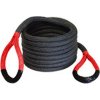
bubba rope
$(KGrHqJHJEkFGstwM5QNBRzF-gHpqg~~60_12.JPG

yes, they're expensive but so is a funeral. Keep in mind that there's 30,000 lbs of force on those straps if you jerk someone out (which you should never do - you should stretch the rope until the other vehicle is extracted).... I see enough dead people, honestly, the stupid things I've heard has made me far less sympathetic or reasonable when it comes to gear. And if you can't afford it, honestly, you shouldn't do it because not only do you risk your life, but you risk the people who ride with you, drive with you, and have to come out and recover you (definition - recovery means your dead; rescue means you've survived long enough to receive treatment).
 
Last edited:

digglesworth

Well-Known Member
Messages
1,789
Location
illinois
These are all good points and I appreciate it. But nothing really has answered my questions yet.... WHAT SIZE/ POUND RATING IS ADEQUATE TO SAFELY EXTRACT A STUCK H3? I've already established the fact that I'll be carrying a set of tie rods (old take off 14s from my 06) and a cv shaft. Plus some fluids, extra belt, and a whole big list of stuff.
 

Big Mike

Well-Known Member
Messages
214
Location
The Republik of Upstate New York..
These are all good points and I appreciate it. But nothing really has answered my questions yet.... WHAT SIZE/ POUND RATING IS ADEQUATE TO SAFELY EXTRACT A STUCK H3? I've already established the fact that I'll be carrying a set of tie rods (old take off 14s from my 06) and a cv shaft. Plus some fluids, extra belt, and a whole big list of stuff.

I'm speaking for me only not the whole offroad community here..

For me double the GVWR of the H3 minimum because you have to account for the vehicles weight and the resistance that is keeping you stuck..
 

4speedfunk

Well-Known Member
Messages
4,250
Location
Tardville
Don't overthink it. You don't need all this crap...it just makes you sink deeper. Leave all this stuff at home and spend your money on tires. By far the single biggest reason you will ever get stuck is crappy tires (or having too much junk on board!). All you need is a $20 trap and a couple clevis's. Just jump in your H3...find some mud...have fun.

P.S. SIZE/POUND RATING?: 30,000 lb. 3-inch x 20 foot from Harbor Freight or some other Chinese outlet.
 

Bigunit

Hammer Down!
Staff member
Messages
6,561
Location
Arizona
I:m with 4speed on the snatch strap - 30k lb., 3" wide is plenty for the H3 or H2. Mine is 30 ft. long. My tow strap is 20 ft. I carry both because they serve 2 entirely different purposes.

Sent from my XT1080 using Tapataint
 

digglesworth

Well-Known Member
Messages
1,789
Location
illinois
Well I think a cv shaft and a set of tie rods isn't rediculous to carry. And the handful of tools it takes change those isn't like carrying the whole tool box. I'd be driving 3hrs minimum to any wheeling areas so getting back is important to me. The mix of stuff everone carries or doesn't carry baffles me. Some carry a lot, some carry nothing.
 
Last edited:

rsc

Well-Known Member
Messages
1,087
Location
Tulsa
In the end its up to you what you want to carry. I think you are on the right track to start. Add more as you feel you need to later. I do suggest that you do a dry run at changing out your trail spares to make sure you have the tools you will need, don't actually replace a CV boot in the driveway, just make sure your stuff fits and you dont need a special tool or different style for your needs. Better to find out in the driveway that your 3/4 open wrench is too long or thick than on the trail.
 

SuperBuickGuy

Well-Known Member
Messages
3,403
Location
Woodinville, WA
These are all good points and I appreciate it. But nothing really has answered my questions yet.... WHAT SIZE/ POUND RATING IS ADEQUATE TO SAFELY EXTRACT A STUCK H3? I've already established the fact that I'll be carrying a set of tie rods (old take off 14s from my 06) and a cv shaft. Plus some fluids, extra belt, and a whole big list of stuff.

A winch will safely extract a stuck H3, a tow strap will (often) extract an H3. I carry a 95,000 lb rating. Consider: if the other vehicle isn't moving, and you pull hard on the strap (because the vehicle weighs more than you) you're well outside of 40,000 lbs of pulling force

the formula is Force = mass * acceleration. Thus, you snatch pull a dead stuck vehicle where you get 5 mph of speed on the pulling vehicle the calculation is 5*5200 or 26,000 lbs of force. using that double or triple idea you're at 52,000 lbs or 78,000 lbs of force because most people keep ramping up their speed until the stuck vehicle is free (or one or both are broken).... again, the safe way is a winch. Food for thought, straps last 10 or so pulls before they part; and a good strap easily costs $200.00. A useable winch (decent Chinese like Superwinch), is 2 or 3 times the cost of a strap. The only reason I drag my strap out is when I'm either holding someone from falling off a cliff, or I need to get someone out quickly (increased risk traded for speed of extraction)

OTOH if you're just pulling someone up a steep slope with a strap, then 20k is just fine
 
Last edited:

digglesworth

Well-Known Member
Messages
1,789
Location
illinois
In the end its up to you what you want to carry. I think you are on the right track to start. Add more as you feel you need to later. I do suggest that you do a dry run at changing out your trail spares to make sure you have the tools you will need, don't actually replace a CV boot in the driveway, just make sure your stuff fits and you dont need a special tool or different style for your needs. Better to find out in the driveway that your 3/4 open wrench is too long or thick than on the trail.

That's my plan... Im gonna get my tools together and do a test run. I've gotta pull my cv shafts to replace the axle seals. I'm gonna only use my trail kit to disassemble the front end. I didn't realize you could change just the boot on a cv... I'll have to look into that.
 
Top